
























Aluminum Catering Trays: Complete Buyer’s Guide
Choosing aluminum catering trays may look straightforward: find the required capacity, check the price and place an order. For commercial catering, foodservice distribution and bulk

Choosing aluminum catering trays may look straightforward: find the required capacity, check the price and place an order. For commercial catering, foodservice distribution and bulk purchasing, however, capacity is only one part of the specification.
Two trays with similar capacities may have different dimensions, depths, shapes and structural designs. Once filled with food, fitted with a lid, stacked or transported, those differences become much more important. A tray intended for a lightweight baked dish does not necessarily need the same characteristics as one carrying several kilograms of prepared food.
Food type, portion size, filled weight, tray dimensions, depth, rigidity, lid compatibility, heating or storage requirements and transportation should therefore be considered together.
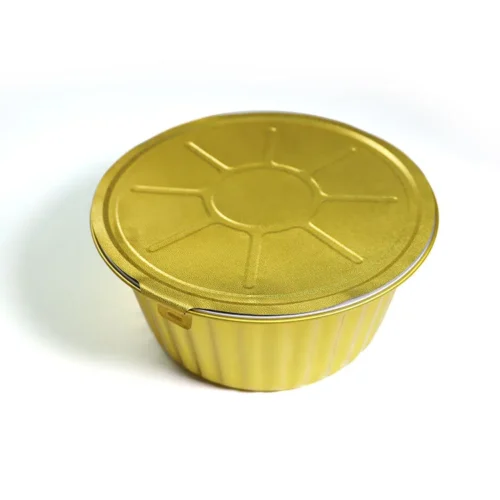
As a manufacturer of smoothwall aluminum foil containers, we currently offer more than 70 products across approximately 15–6000 ml, including round, rectangular and special-shaped designs, with both stock products and customization available.
This guide focuses on the practical questions B2B buyers should consider when selecting and purchasing aluminum catering trays.

The first question should be simple: what will the tray actually contain?
Bread, vegetables, pasta, roasted meat and foods containing sauces place different demands on a container. Weight matters, but so do the way the food is distributed inside the tray and whether the tray needs to be carried, covered, stacked or transported after filling.
This difference becomes more important with larger catering trays. A container that feels sufficiently rigid when empty can behave differently after it has been filled with a heavy meal.
For this reason, buyers should avoid choosing a catering tray solely because its stated capacity appears suitable. Expected filling weight and food type provide useful context when comparing products.
The same applies to food consistency. Dry foods and liquid-rich foods create different packaging considerations. Foods containing sauces, oils or juices make lid fit and leakage control more relevant, while heavy foods increase the importance of rigidity and handling.
A good specification therefore starts with the application and works backward to the container.
Commercial buyers often begin with volume: 500 ml, 1,000 ml, 2,000 ml or a larger capacity. This is a useful starting point, but capacity alone does not describe the full geometry of a catering tray.
A wide and shallow tray may have a similar nominal capacity to a narrower and deeper tray. They can still perform differently in food preparation, presentation, transportation and storage.
This is why dimensions need to be considered together with capacity. Depending on the product design, useful measurements may include top dimensions, bottom dimensions and overall depth. The rim also matters when the tray needs to work with a matching lid or sealing system.
Depth can substantially change how a tray is used. Deeper containers may suit larger portions or foods containing sauce, while shallower containers may make sense when greater surface area or presentation is important.
Shape is another consideration. Rectangular trays can work well for many prepared foods and make practical use of space, while round containers may suit other dishes or presentation requirements. Special shapes can serve more specific applications or branding needs.
There is no universally “best” shape. The correct choice depends on the food and operating process.
Foil thickness is an important specification, but using thickness alone to compare tray strength can be misleading.
Container dimensions and geometry also influence rigidity. The bottom design, sidewalls, rim and overall shape all contribute to the way a tray behaves when loaded. Filling weight and how that weight is distributed matter as well.
This is particularly relevant for large catering trays. As dimensions and food weight increase, handling becomes more demanding. A large tray of roasted meat or prepared food places different demands on the container than a smaller tray containing a light side dish.
For B2B purchasing, the practical question is therefore not simply “Which tray is thicker?” but “Which tray specification is appropriate for the intended food, filling weight and handling process?”
Buyers sourcing larger trays should provide suppliers with the expected food type and approximate filled weight whenever possible. For important applications, evaluating samples with the intended food and normal handling process can also help before committing to a large order.
A catering tray does not always operate as a stand-alone product. In many applications, the lid or sealing method is part of the packaging system.
A well-matched lid can support food protection, storage, transportation and stacking. When food contains sauces, oils or juices, the relationship between the container rim and closure becomes even more important.
Heat-sealed applications introduce another set of considerations. Tray dimensions, rim design, sealing material and equipment need to work together. A tray that looks suitable based on capacity alone may not necessarily be appropriate for a particular sealing process.
The intended food process helps determine the correct closure. A caterer transporting prepared food to an event may have different requirements from a food manufacturer sealing trays for retail distribution.
Buyers should therefore consider what happens after filling. Will the food be covered while hot? Will it cool first? Does it need refrigeration or freezing? Will the filled trays be stacked during delivery? Will consumers reheat the food later?
These questions make lid and sealing selection much more practical.
When a food container leaks, it is easy to blame the tray itself. In practice, leakage can involve several factors.
The container rim may be damaged or deformed. A lid may not match correctly. Food may contaminate the sealing area. The tray may be overfilled, or excessive pressure may be applied during stacking and transportation.
Foods containing sauce, oil or meat juices naturally require more attention than dry foods.
For these applications, buyers should consider the tray, rim, lid or seal, filling level and transport process together. A solution that works well for one food may not behave exactly the same with another.
This is another reason samples can be useful in B2B sourcing. Rather than evaluating only an empty container, buyers can check how the intended food, closure and handling process work together before finalizing a large order.
Aluminum catering containers are widely associated with hot food, baking and reheating, but buyers should evaluate the complete packaging system rather than the aluminum base alone.
The tray, lid or sealing material, food and heating or storage process can have different requirements.
One catering business may prepare hot food, cover the tray and deliver it shortly afterward. Another operation may refrigerate prepared food before transportation. A food manufacturer may need to freeze a meal for longer storage and reheat it later.
Although all three applications may use an aluminum container, they do not necessarily require the same packaging specification.
For oven, freezer or freezer-to-oven applications, select the specific container and closure for the intended process and follow relevant product and equipment instructions. The temperature suitability of an aluminum tray should not automatically be assumed to apply to every lid or sealing component used with it.

Smoothwall and traditional wrinkle-wall foil containers both have established applications in foodservice.
Smoothwall containers may be considered where appearance, rim design, sealing, rigidity, branding or a more finished presentation is important. Traditional foil trays remain widely used for many straightforward catering and foodservice applications.
Neither construction should be treated as universally better.
The appropriate choice depends on the food, required dimensions, closure system, presentation, handling requirements and target purchasing cost. Buyers should compare those factors against their actual operation rather than selecting a construction based on appearance alone.
For businesses specifically looking for smoothwall packaging, available products can be selected from existing sizes or developed further when a standard container cannot meet the required specification.
Existing products are often the easiest starting point for a new purchasing project.
With more than 70 existing aluminum foil container products across approximately 15–6000 ml, buyers can first check whether an available size, shape and capacity already matches the application.
This approach can be especially practical when the project does not require a unique shape, exact proprietary dimensions or extensive branding.
Customization becomes relevant when a standard product cannot meet a real requirement. This may involve a specific length, width or depth, target capacity, special shape, foil specification, color, printing, lid requirement or outer packaging.
Depending on the requested design, a custom container may require new tooling.
If the buyer already has a drawing, it can be used to communicate dimensions and structural requirements. If an existing product is being replaced, a physical reference sample can also help define the desired container.
The important point is that customization should solve a real packaging or business need. If an existing product meets the requirement, creating a new mold solely for the sake of having a “custom” tray may add unnecessary time and cost.
Two quotations are only comparable when the underlying products are comparable.
A supplier may quote a tray based on nominal capacity, but another tray with the same stated capacity may have different dimensions, depth, structure, material usage, lid requirements and packaging.
Buyers should therefore compare more than the price per piece.
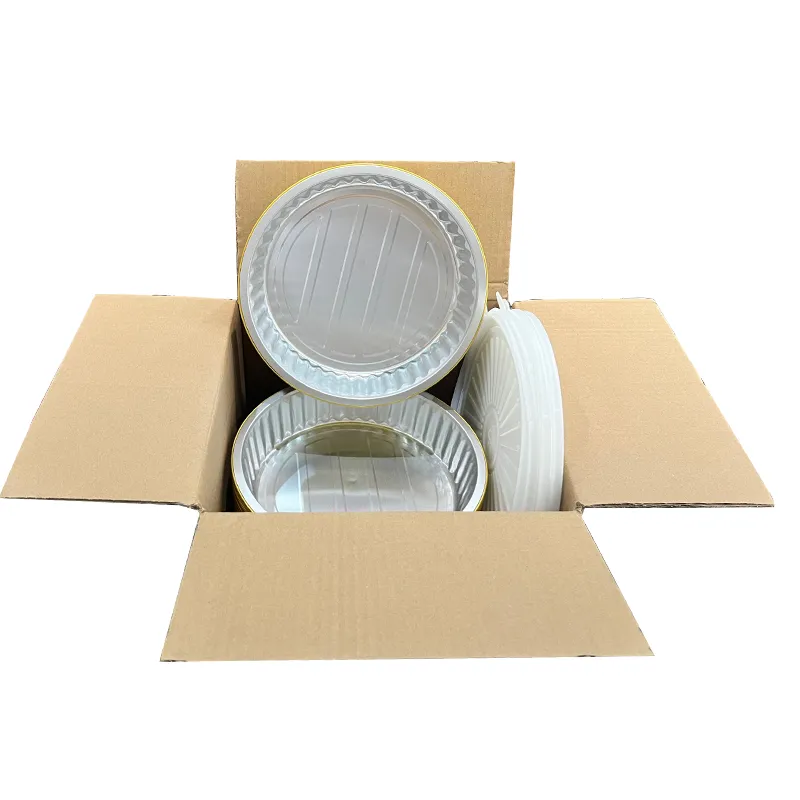
Useful specifications include the actual dimensions, capacity, relevant foil specification, compatible lid, pieces per carton, carton dimensions, MOQ, customization requirements and production lead time.
Packaging also matters for international orders. Aluminum catering trays are lightweight products, but depending on the product and packing configuration, transportation volume can become an important part of the purchasing cost.
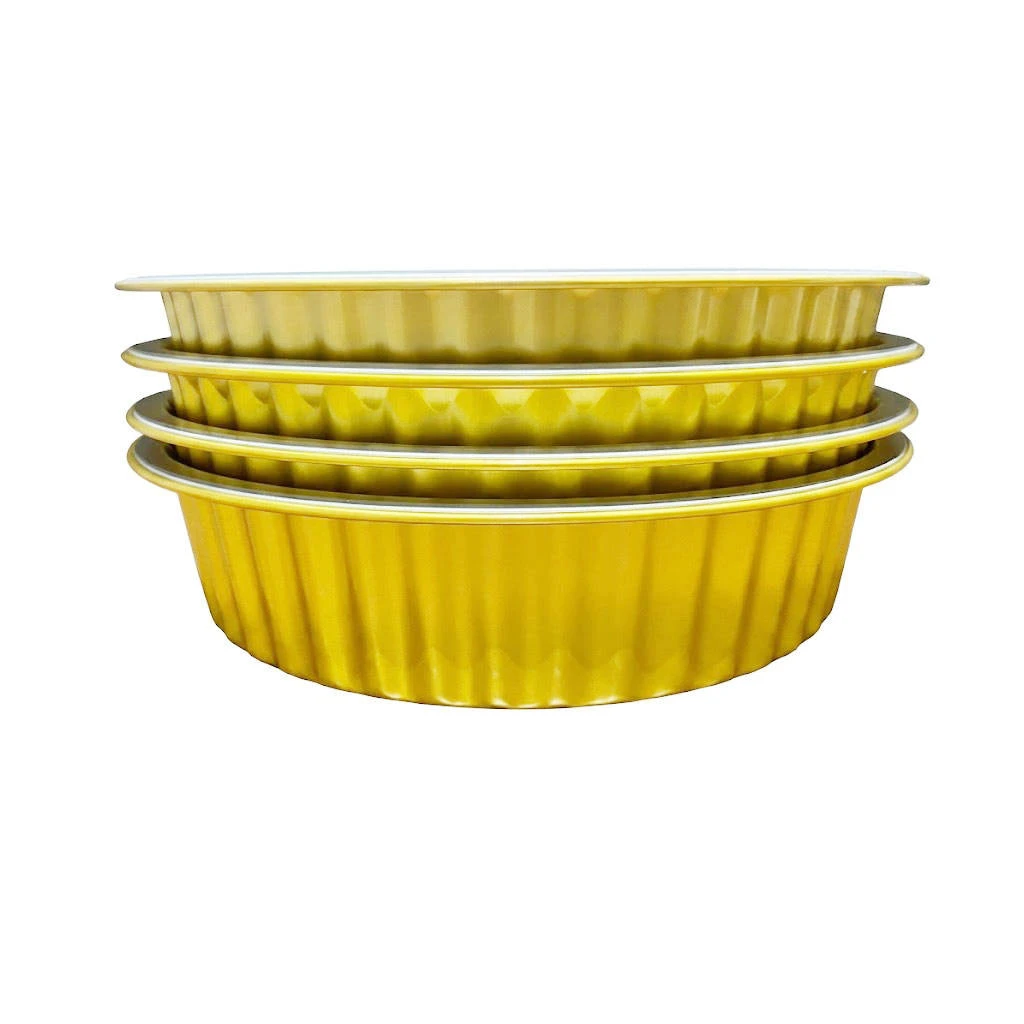
This makes nesting, carton quantity and carton dimensions relevant when comparing bulk quotations.
A lower unit price is valuable only when the product specification and overall purchasing conditions still meet the application.
A clear RFQ helps a supplier recommend products more efficiently and reduces unnecessary back-and-forth communication.
If the exact product model is not known, buyers can provide:
“I need a large catering tray” can refer to many different products. A request that explains the food, approximate capacity, filling weight, lid requirement and expected order quantity provides much more useful information.
If samples are available, they can then be evaluated against the intended application before a larger purchasing decision is made.
For importers, distributors and larger foodservice buyers, selecting a tray is only one part of the order.
MOQ, available SKUs, production lead time, carton quantity, repeat-order consistency and shipment planning can all affect the purchasing decision.
A distributor may need several sizes rather than one tray. In that case, the product mix becomes important. Catering trays for individual portions, medium-size prepared dishes and large shared meals may serve different customers within the same distribution network.
Stock products can simplify this process when suitable specifications already exist. Custom products may become relevant when the buyer needs a differentiated size, shape or brand presentation.
For repeat purchasing, maintaining a clearly defined specification is also important. Buyers should know exactly which product, lid and packing configuration has been approved so that future orders can be compared against the same requirements.
For international purchasing, shipping volume should also be considered alongside the product price, particularly when ordering multiple bulky packaging SKUs.
Before placing a bulk order, confirm:
Not every order requires the same level of detail, but defining the application clearly at the beginning usually makes product comparison easier.
Frequently Asked Questions
What size aluminum tray is best for catering?
There is no universal size for catering. The right choice depends on the food, portion quantity, filling weight, required depth, lid and handling process. Buyers should consider actual food volume and use conditions rather than capacity alone.
Are aluminum catering trays suitable for hot food?
Aluminum trays are commonly used for hot-food applications. The specific container, lid or sealing material and handling process should still be selected for the intended application.
Can aluminum catering trays go in the oven?
Aluminum containers are commonly used in oven applications, but the suitability of the specific tray and any lid or sealing component should be confirmed for the intended process. Applicable product and equipment instructions should be followed.
Can aluminum catering trays be frozen?
Aluminum containers are used in many frozen-food applications. The complete packaging system, including the closure and intended storage/reheating process, should be considered when selecting a product.
Can aluminum catering trays be customized?
Customization can include dimensions, capacity, shape, foil specification, color, printing, lids and packaging, depending on the project requirements and manufacturing feasibility.
Should I request samples before a bulk order?
Samples can be useful when the buyer needs to evaluate size, lid compatibility, handling or performance with a particular food before committing to a larger order.
A catering tray should be selected as part of a food process rather than as an isolated container.
Capacity is important, but so are dimensions, depth, food weight, structural requirements, lids, storage, heating and transportation. Bulk buyers should also consider MOQ, packaging, repeat-order requirements and shipment planning.
We manufacture smoothwall aluminum foil containers across approximately 15–6000 ml, with more than 70 existing products in round, rectangular and special-shaped designs. Stock products are available, while customization can be considered when an existing specification does not meet the application.
If you are sourcing aluminum catering trays for catering, foodservice distribution, commercial kitchens or importing, provide the food type, target capacity or dimensions, approximate filling weight, lid requirements and expected order quantity. This makes it easier to identify whether an existing product is suitable or whether a custom solution should be considered.

Coffee Capsule Manufacturing Specialist · Kervoo
Since 2024
Choosing aluminum catering trays may look straightforward: find the required capacity, check the price and place an order. For commercial catering, foodservice distribution and bulk